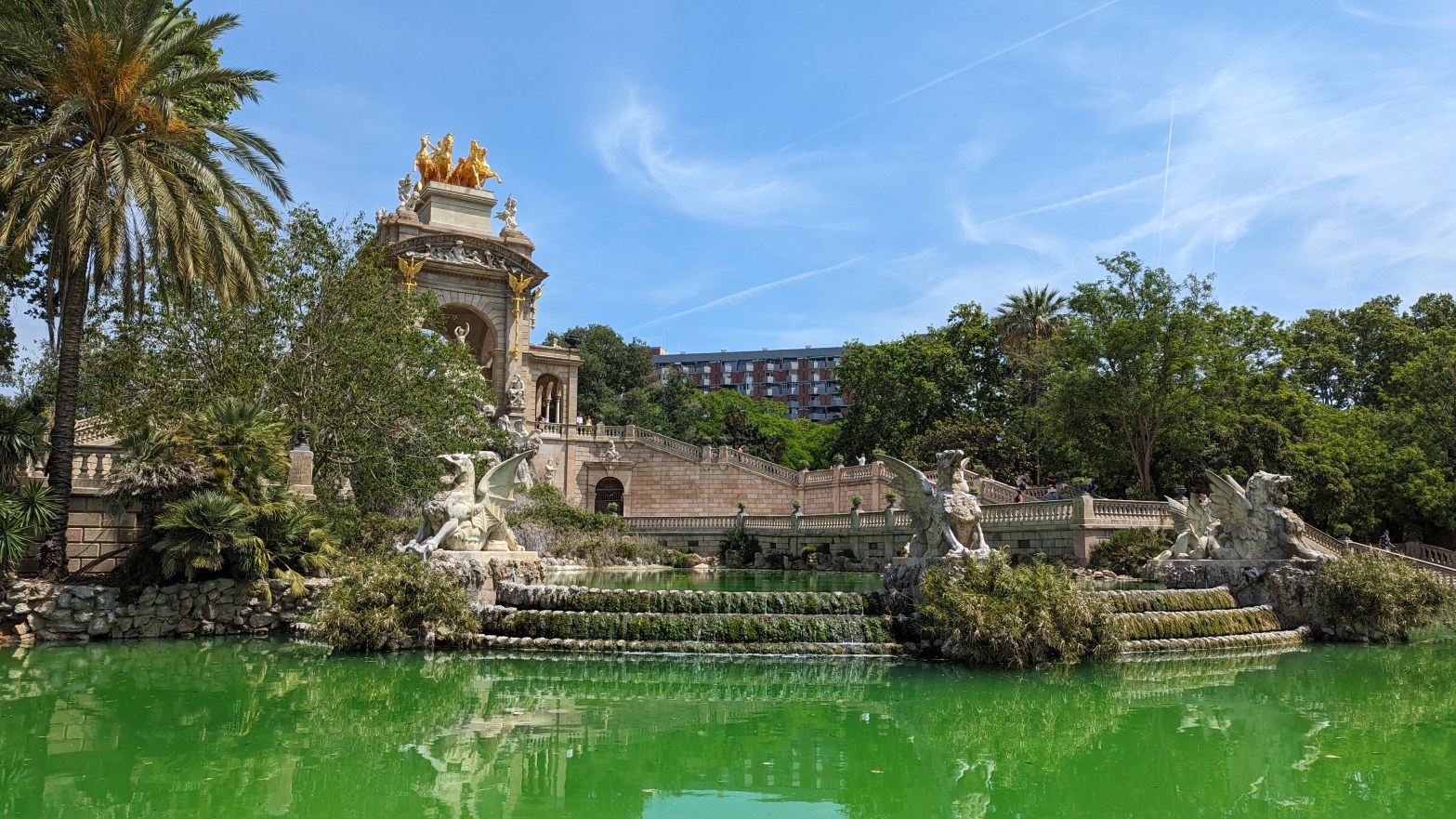
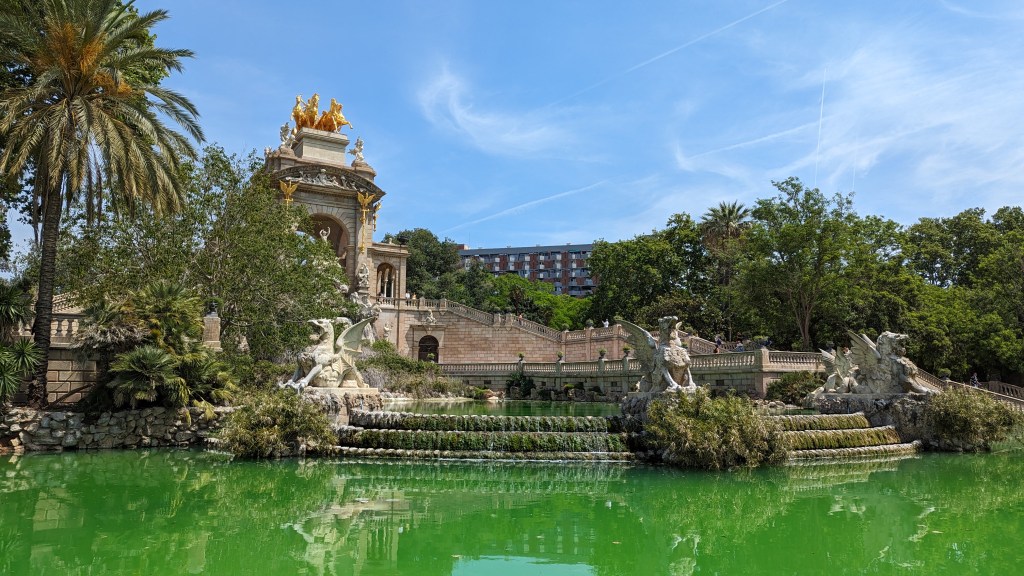
Parc de la Ciutadella, located in the heart of Barcelona, is one of the city’s most popular green spaces. Its origins trace back to the 18th century when it was built as a military fortress. Over time, the fortress was transformed into a public park in the mid-19th century, becoming a favorite urban retreat for both locals and visitors.
Following the War of the Spanish Succession in 1714, Barcelona was occupied for 13 months by Philip V of Spain. To increase control, Philip V built the citadel, the largest fortress in Europe, displacing many residents. The fortress housed 8,000 people and had significant defensive features, later became a jail for political prisoners under Bourbon rule. By 1869, General Prim demolished part of the fortress and eliminated the prison clearing the way for its conversion into a public park.
Redesigned for the 1888 Universal Exposition, Parc de la Ciutadella now hosts a variety of historic landmarks, including the Parliament of Catalonia, museums, a grand fountain, and the Barcelona Zoo. Its lush landscape, with expansive greenery, serene ponds, and tree-lined pathways, offers a peaceful escape from the hustle and bustle of the city.
Parc de la Ciutadella was designed by a Spanish-Catalan architect Josep Fontsère. Antoni Gaudí, a young and unknown architect at that time, assisted Fontsère with the design of the park’s impressive waterfall, known as the “Cascada.”
The park hosted the 1998 World Exposition.
Parc de la Ciutadella, once the site of a major military stronghold, is now a symbol of beauty, relaxation, and historical significance in Barcelona.
Travel Smart, Travel Easy

Cascada
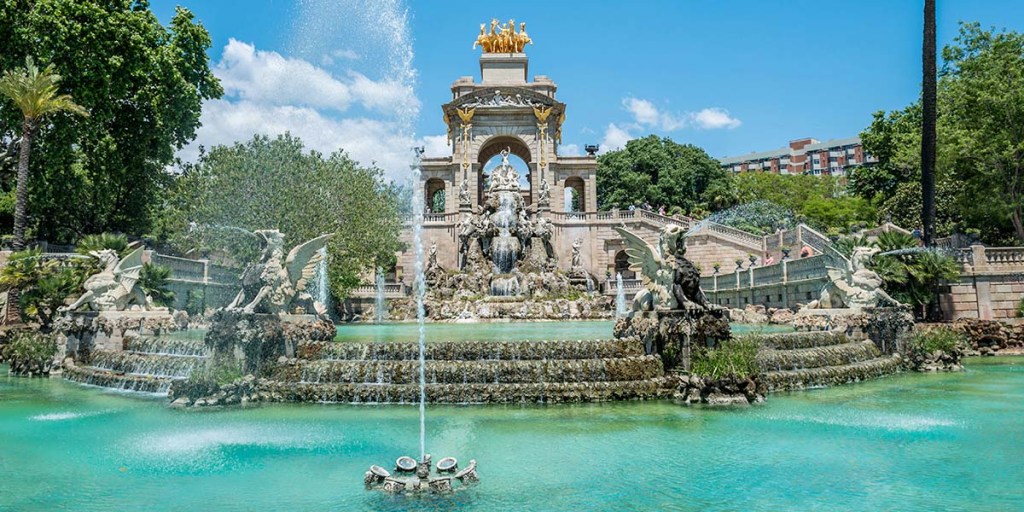
The Cascada Monumental, located in the northern part of Ciutadella Park, is a striking piece of architectural art. Originally unveiled in 1881, it sparked early criticism, but over the next six years, the monument was enhanced with elaborate features, and by 1888, it was completed in time for the Universal Exhibition. The design was directed by a Spanish-Catalan architect Josep Fontsère, with contributions from a young Antoni Gaudí, whose work included crafting the water system. Inspired by the grandeur of Rome’s Trevi Fountain, the Cascada combines classical influences with unique local flair.
The monument’s standout elements include its staircases, which curve upward like crab pincers, guiding visitors to a pedestal featuring a statue of Venus. Below, a large water basin is watched over by winged dragons, indicating Gaudí’s fascination with mythical creatures. The cascade is divided into multiple levels, creating a sense of depth and inviting exploration throughout the park.
Passeig de Pujades greeted visitors with mythological figures such as Aurora, Venus, and Eros, as well as griffins and water nymphs. The golden statue of Aurora riding her chariot atop the monument shines brightly, while the whole design combines creative collaboration and imaginative thinking. Today, the Cascada Monumental remains a must-see sight, with impressive architecture paying tribute to the stunning artwork of 19th-century Barcelona.
Unfortunately, due to the drought impact, decorative fountains including Montjuïc Magic Fountain, Parc de la Ciutadella Fountain, and Pedralbes Gardens Fountains will not operate this year.
In addition, beaches in Barcelona and Catalonia will no longer offer free showers.
This was the official announcement, but locals said different things….
Hotels for all desires

Bookong.com
Find your perfect deal

ChepOair
Getting to Parc de la Ciutadella:
The park is conveniently situated near the Arc de Triomf and the Barri Gòtic, making it easily accessible from various parts of Barcelona.
Transportation:
You can reach the park via the Barcelona Metro and Trambesòs. The nearest metro station is Ciutadella-Vila Olímpica on Line L4, which is named after the park and the nearby Vila Olímpica area. However, the closest entrance to the park is near Arc de Triomf station, which serves both the metro and the Rodalies commuter train network. Additionally, the city’s main bus station, Estació del Nord, is just a short walk away.
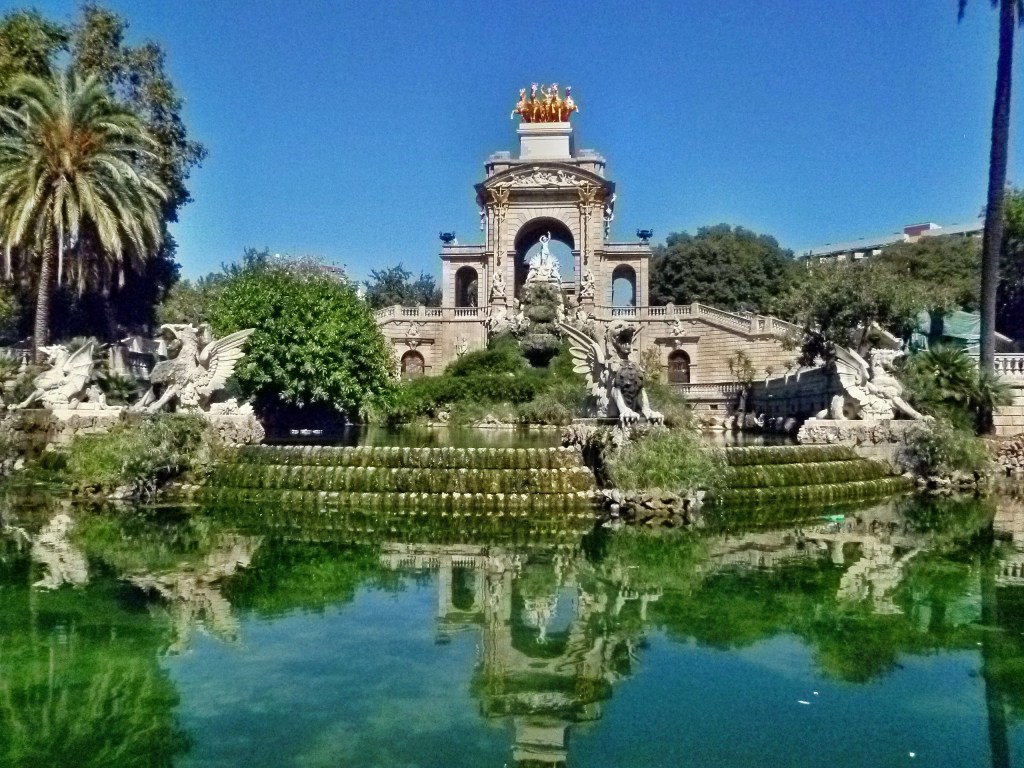
Parc de la Ciutadella is a must-see destination for anyone visiting Barcelona. Its convenient location near Arc de Triomf and easy access via metro, train, and bus make it an ideal stop. Whether you’re looking to explore historic landmarks, relax in its green spaces, or admire the stunning architecture, the park offers something for everyone. Its blend of natural beauty and cultural significance makes it a top attraction that should not be missed.
If you would like to contribute to my blog, you can please do so here
Connect with me on Social Media:
Discover more from Suitcase Travel Blog
Subscribe to get the latest posts sent to your email.
 Suitcase Travel Blog
I love Parc de la Ciutadella! There’s so much history in the buildings there and it’s a lovely place to relax and enjoy outdoors.
LikeLiked by 1 person
I agree. We found this park accidentally and spent there a couple hours. So relaxing and great escape from the city.
LikeLiked by 1 person
Im dying to visit Barcelona. Definitely inspired by this post.
LikeLiked by 1 person
I’m very glad that my post inspired you. I’m absolutely sure that you will fell in love with Barcelona as I did and you will find lots of things to explore there. Thank you for stopping by Cristy. 🙋
LikeLike
Your photos are stunning. Makes me want to book an airline ticket to Barcelona!
LikeLiked by 1 person
😀 Thank you! Barcelona have really inspired me. I would recommend to visit it. There so much to see. Very beautiful city.
LikeLiked by 1 person
Great post! I really enjoyed reading it.
LikeLiked by 1 person
Thank you! Glad you like it and thanks for visiting!
LikeLike