

Light as air. Graceful. Unforgettable. These words describe Anna Pavlova, the legendary Russian ballerina of the early 20th century… but they also describe the dessert she inspired.
The pavlova cake—a crisp, cloud-white meringue with a soft, marshmallow heart, topped with whipped cream and fresh fruit—was created in her honor during her 1920s tour of Australia and New Zealand. It was believed that the airy layers were mirrored the lightness of her dancing and the frills of her tutu.

During lifetime, Anna Pavlova’s name was everywhere—clothes, chocolates, even perfume. But the cake became the most famous tribute of all.
Who invented it?

Here’s where the fun (and arguments) start.
New Zealand’s version: According to research by biographer Keith Money, a Wellington hotel chef created the pavlova cake in 1926 to delight the ballerina during her tour.
Australia’s version: Chef Bert Sachet at the Esplanade Hotel in Perth supposedly invented it in 1935 for a birthday party, exclaiming, “As airy as the ballerina Pavlova!”
To this day, Australia and New Zealand are still debating who made it first.
Fun Facts
- Australia and New Zealand still argue over who invented it first. This gastronomic “battle” has been going for nearly 100 years.
- When berries are in season the dessert is traditionally served at Christmas in Australia and New Zealand.
The Record-breaking Pavlovas
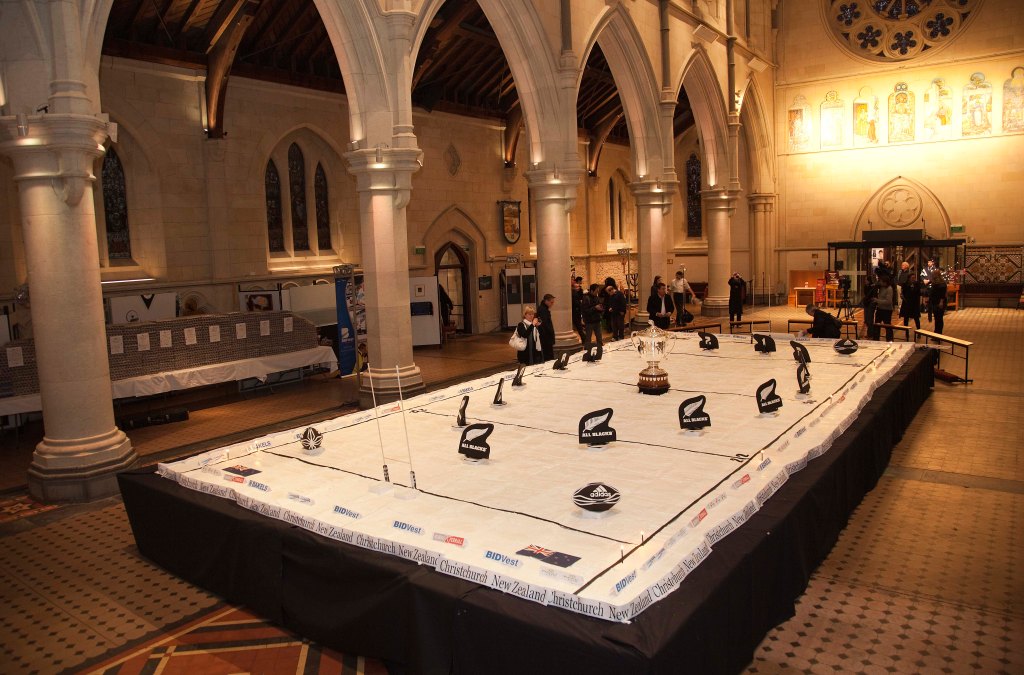
1999: New Zealand made a 45-meter “Pavzilla.”
2005: Students made an even bigger “Pavkong,” 64 meters long, using 5,000 egg whites, 150 kg sugar, and 150 liters of cream.
A Classic Pavlova Recipe to Try at Home
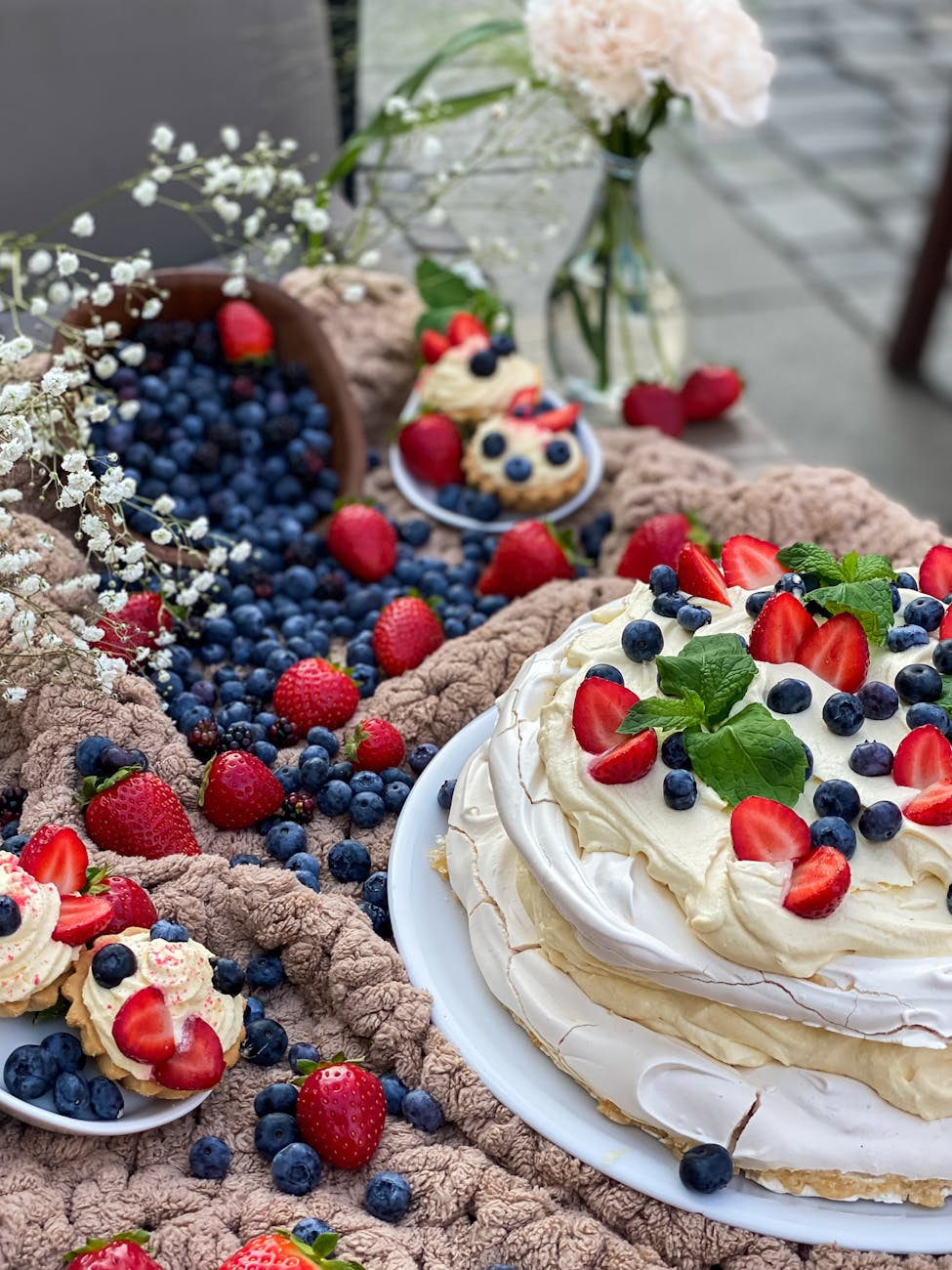
Pavlova is a light, elegant dessert made from egg whites whipped into a thick foam, then sweetened and stabilized with sugar, white wine vinegar, cornstarch, and vanilla.
The cornstarch gives the pavlova crisp outer shell while keeping soft, marshmallow-like inside. This is biggest difference from a standard meringue.
Undecorated cake (baked meringue) can be left overnight in the oven in which it was baked, so that it can be decorated in the morning before serving.
Ingredients:
- 4 large egg whites (room temp)
- 1 cup (200g) caster sugar
- 1 tsp white vinegar
- 2 tsp cornstarch
- 1 tsp vanilla extract
- 1 cup (250ml) heavy cream
- Fresh fruit (strawberries, kiwi, passion fruit, berries)
Method:
- Preheat oven to 250°F (120°C). Line baking tray with parchment.
- Beat egg whites until soft peaks form. Gradually add sugar, one spoon at a time, until glossy stiff peaks form.
- Gently fold in vinegar, cornstarch, and vanilla.
- Spoon mixture onto tray in a circle (about 8″ wide), smoothing sides.
- Bake for 90 minutes. Turn oven off, leave pavlova inside to cool completely.
- Whip cream until soft peaks form, spread over cooled base, top with fruit.

The next time you bite into a slice, remember—it’s more than dessert. It’s the legacy of a woman whose art still floats on the air, 100 years later.
I don’t bake myself, so if you try this recipe, let me know if it turns out as good as it looks. I’ll be happy enjoy my coffee and admire your baking skills!
If you would like to contribute to my blog, you can please do so here
Connect with me on Social Media:
Travel Smart, Travel Easy

Discover more from Suitcase Travel Blog
Subscribe to get the latest posts sent to your email.


Desert Looks yummy
LikeLiked by 1 person
It is yummy 😋
Very delicious
LikeLiked by 1 person
Such a delightful post. Both amusing and informative.
LikeLiked by 1 person
Thank you! Glad you like it
LikeLiked by 1 person