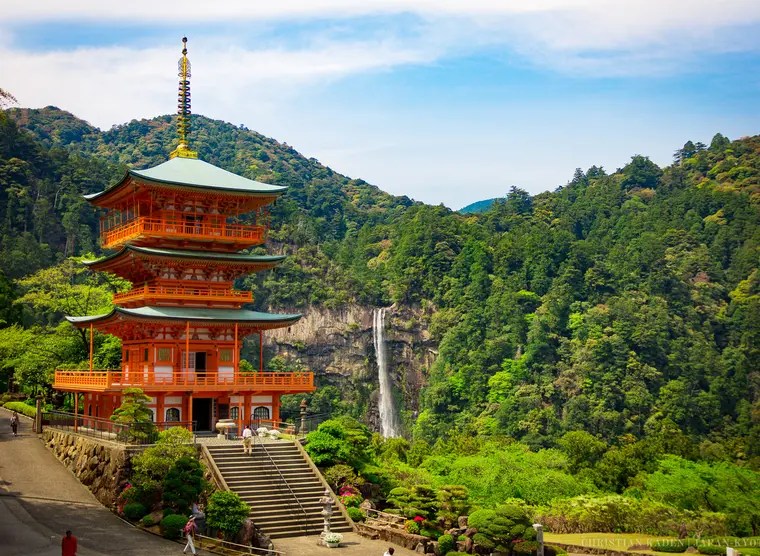
A New Perspective, A New Journey!
Travel is not only about visiting famous landmarks or ticking places off a list. Sometimes, the most interesting discoveries come from people who have lived somewhere, explored beyond the usual routes and found something special along the way.
I’m excited to introduce guest contributions to Suitcase Travel Blog and bring you stories and perspectives from fellow travellers around the world. For this first feature, I’m inviting you to discover a different side of Tokyo — one that takes you beyond the familiar sights and into the character of its neighbourhoods.
From charming streets and local hangouts to everyday discoveries, there’s plenty to explore.
I hope you enjoy this journey through a different side of Tokyo and discover a few new places to add to your own travel list!
Meet Our Guest Author
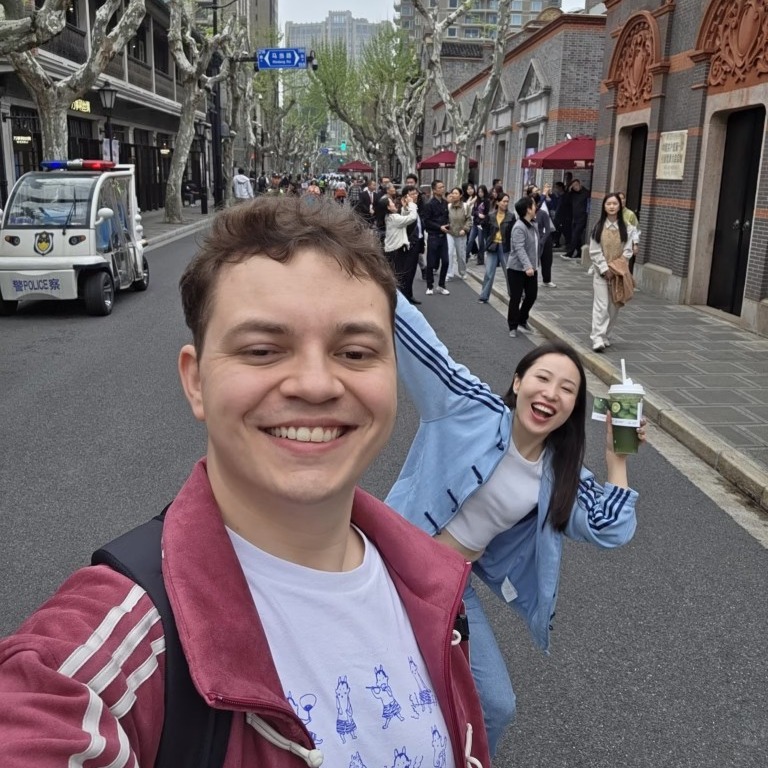
Max is a Swiss travel writer from Solothurn. After eight months in Seoul as an exchange student, he moved to Tokyo, where he studied at Waseda University and lived for three years on the Chuo Line, first in Ogikubo and then in Koenji. He writes about Japan, Korea and Switzerland on his blog Max on the move maxonthemove.com Instagram: @maxintokyo
Three Stops on the Chuo Line: A Local’s Day in Kichijoji, Asagaya and Koenji
Most first-time visitors to Tokyo stay inside the Yamanote loop. They move between Shinjuku, Shibuya, Harajuku and Asakusa, see the famous crossings and towers, and fly home thinking they have seen the city. They have seen one version of it. The Tokyo that people actually live in starts a few stops further west, along the orange trains of the JR Chuo Line.
I lived on this line for three years, first in Ogikubo and later in Koenji, and this part of western Tokyo became my favourite part of the city. The streets are calmer, the neighbourhoods are walkable, and the food feels personal rather than packaged for tourists. Three stations in particular sum it up for me: Kichijoji, Asagaya and Koenji. They sit only minutes apart, yet each has a completely different personality.
This is the day I would plan for a friend visiting me: a green morning in Kichijoji, a slow afternoon in Asagaya and a loud evening in Koenji.
Getting your bearings
All three stations are on the JR Chuo Line heading west from Shinjuku. Koenji comes first, about ten minutes out. Asagaya is the next stop. Kichijoji is a little further, about fifteen to twenty minutes from Shinjuku, and the stations of Ogikubo and Nishi-Ogikubo lie in between.
Two train tips will save your time:
- On weekends, take the Local train. On Saturdays and Sundays the Chuo Rapid does not stop at Koenji, Asagaya or Nishi-Ogikubo. It does stop at Kichijoji, so you can ride the Rapid out in the morning and switch to the yellow Chuo-Sobu Local for the stops back east.
- Use an IC card. A Suica or Pasmo card makes hopping on and off between neighbourhoods effortless, and the rides between these stations cost very little.
Morning: Kichijoji, the park and the alleys.
Kichijoji is the most polished of the three. It regularly tops lists of the places where Tokyo residents would most like to live, and it is easy to see why: a busy shopping district, a web of old alleys and one of the city’s loveliest parks, all within a few minutes’ walk of the station. When I lived in Ogikubo and later in Koenji, it was just a short ride away, and I kept going back. My Kichijoji guide has more food spots and hidden corners if you want to stay longer.
Inokashira Park
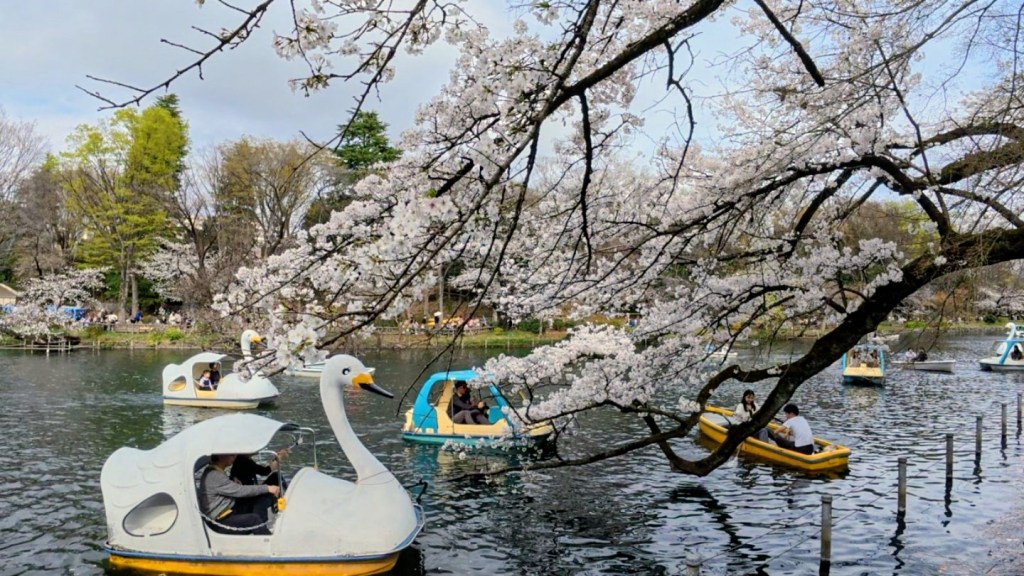
Start the day in Inokashira Park, a short walk south of the station. The park wraps around a long pond lined with trees, and on a sunny morning the paths are full of joggers, dog walkers and families feeding the ducks. You can rent a rowing boat or one of the swan-shaped pedal boats and take it slowly across the water. In spring the cherry trees along the pond make it one of the best hanami spots in western Tokyo, and it feels far more relaxed than the crowded central parks.
If you love Studio Ghibli, the Ghibli Museum sits at the far end of the park. Tickets have to be booked in advance and often sell out, so plan ahead if it is on your list.
Harmonica Yokocho
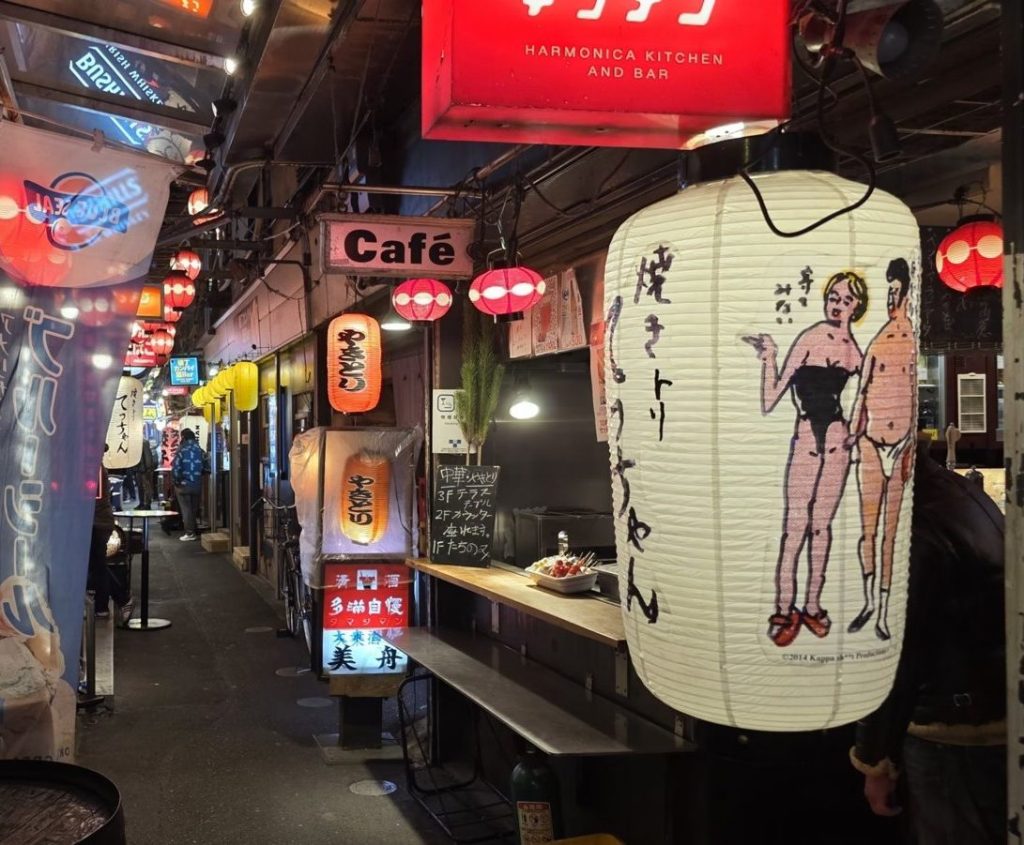
Walk back towards the station and dive into Harmonica Yokocho, just across from the north exit. This maze of narrow lanes started as a black market after the Second World War, and its rows of tiny stalls are said to look like the reeds of a harmonica. During the day it is a mix of small food shops and stands. In the evening the lanterns come on and the tiny bars fill up shoulder to shoulder. For a morning visit, grab a snack, wander the lanes and come back another night if you want the full atmosphere.
Afternoon: Asagaya, the quiet literary town.
From Kichijoji, take the Local train three stops east to Asagaya. It is the quietest and most cultured of the three. Asagaya has long been a literary town, once home to writers such as Dazai Osamu, and that creative streak still shows in its small theatres, jazz bars and second-hand bookshops. There are no big sights here, and that is exactly why I like it. For more places to eat, see my Asagaya food guide.
Asagaya Pearl Center
Right outside the south exit begins the Asagaya Pearl Center, a long covered shopping street that is busy in any weather. It is lined with everyday shops, bakeries and small restaurants rather than souvenir stalls, so it is a good place to see how a Tokyo neighbourhood actually shops. In early August it hosts the Asagaya Tanabata Festival, when huge handmade paper figures hang along the whole arcade.
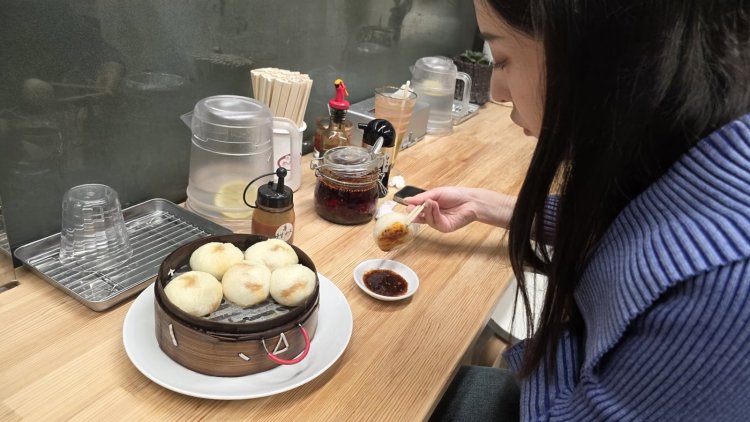
Minmin for xiaolongbao
Right outside the south exit begins the Asagaya Pearl Center, a long covered shopping street that is busy in any weather. It is lined with everyday shops, bakeries and small restaurants rather than souvenir stalls, so it is a good place to see how a Tokyo neighbourhood actually shops. In early August it hosts the Asagaya Tanabata Festival, when huge handmade paper figures hang along the whole arcade.
Star Road and Bar 44sonic
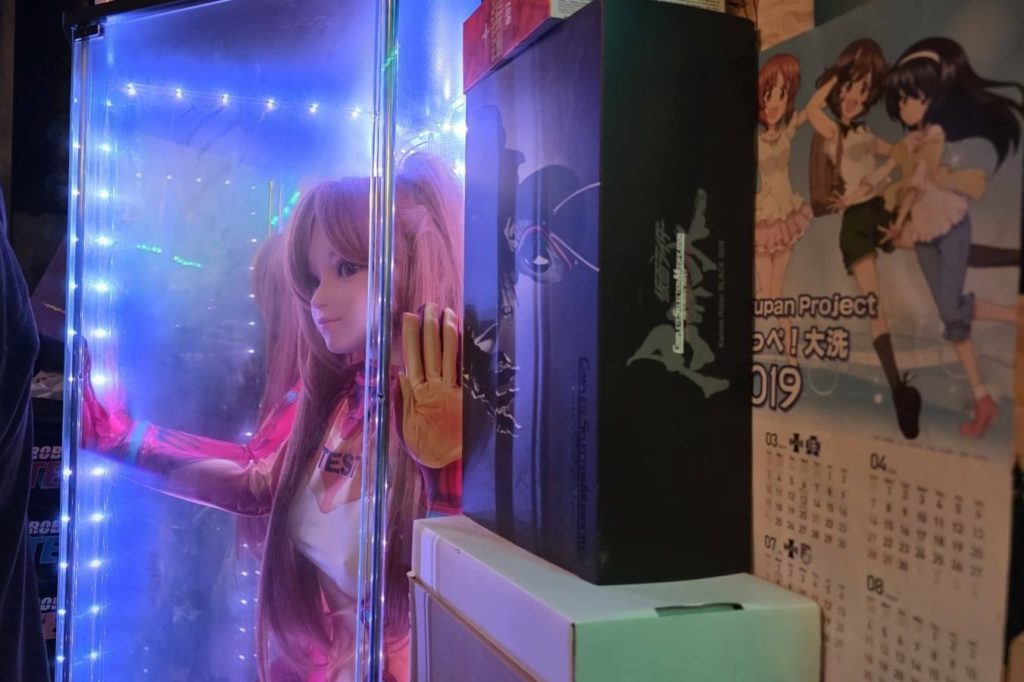
As the afternoon turns into evening, the narrow lanes around the station come alive. Star Road, on the north side, is a tight row of tiny bars and eateries where every counter seats only a handful of people. Before moving on, stop for one drink at Bar 44sonic. It is run by a former visual effects artist from the Japanese anime industry and feels more like a private pop culture museum than a bar, with rare anime memorabilia, detailed Gundam models and a life-sized Asuka from Evangelion. Every drink has the same flat price.
Evening: Koenji, the counterculture heart
One stop further east is Koenji, my home base for the last part of my time in Tokyo. People sometimes call it the Brooklyn of Tokyo, but it has a personality all of its own: vintage clothing, record shops, live music houses and some of the best casual food in the city, all packed into the streets around one station. If you want to stay longer than one evening, my Koenji neighbourhood guide covers the best streets, bars and food spots in more detail.
Vintage arcade
If you arrive before 8 pm, start with the shopping streets. Junjo Shopping Street runs north from the station, while PAL and Look Street run south and hold the densest collection of vintage boutiques, thrift stores and record shops. Prices range from a few hundred yen in the thrift bins to serious designer pieces, so it is easy to lose an hour or two here.
Dinner and drinks
Koenji is where I ate most of my meals in Tokyo, so I could fill a whole article with restaurants. Three places I keep recommending:
- Mazesoba Minami for maze soba, the brothless ramen mixed with sauce, egg and toppings. It is my favourite maze soba in Tokyo.
- Sun-chan for Shanghai-style pan-fried xiaolongbao, crispy on the bottom and juicy inside. We used to eat there at least once a week.
- Rocky Kanai, one of my all-time favourite izakaya, for a long evening of small plates and drinks.
Many of the smallest places only take cash, and some of the best ones sell out early, so arrive hungry and do not be afraid to just follow the smell of grilled skewers. One small Koenji luxury is outdoor seating along the streets near the station, which is rare in Tokyo and perfect on a warm evening.
Time your visit for a festival
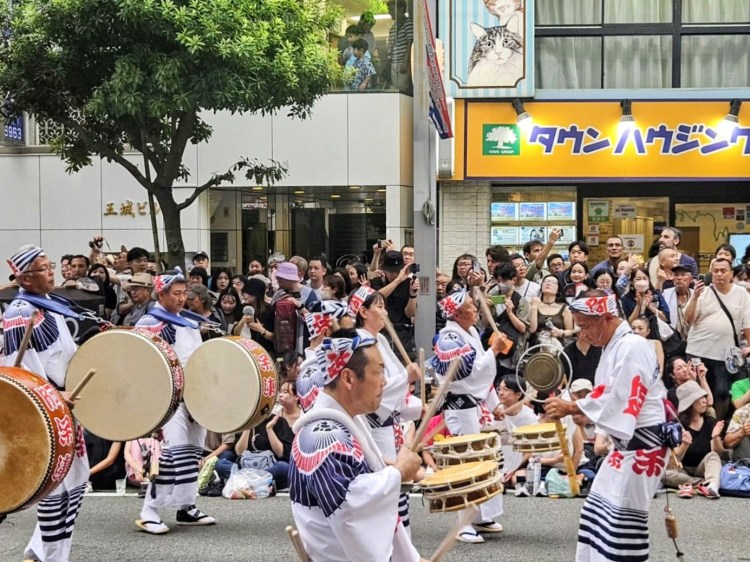
Koenji throws some of the best street parties in the city. At the end of August, the Koenji Awa Odori fills the streets with more than ten thousand dancers and musicians. In spring, the Koenji Street Performer Festival turns the whole neighbourhood into an open-air circus. We discovered it completely by chance one Saturday, coming home with shopping bags and suddenly finding acrobats, cosplayers and comedians on every corner. It ended up being one of my favourite weekends in Japan.
Practical tips for the Chuo Line day
- Start west and finish east. Kichijoji is best in the morning light, and Koenji is best after dark.Carry cash. Many small restaurants and bars in all three neighbourhoods are cash only.
- Keep an eye on the train type. The Rapid skips Koenji and Asagaya on weekends.
- Leave space in your plans. The best moments here are rarely planned. One evening, on the way home to Koenji, we got off a stop early in Nakano and found a group of taiko drummers performing outside the station. We stayed for half an hour.
Is the Chuo Line worth it on a short trip?
If you only have two or three days in Tokyo, the big central sights will take most of your time. But if you have a free afternoon, or you are coming back for a second visit, these three stations show you a side of the city that most tourists never see: real neighbourhoods, small family-run restaurants and a relaxed, creative atmosphere only fifteen minutes from Shinjuku. Get off the train a few stops before the crowds do, and Tokyo starts to feel like a place where people actually live.
A Note from Suitcase Travel Blog
A big thank-you to Max for sharing his experiences and taking us along on this journey through Tokyo’s neighbourhoods. It’s always a pleasure to discover places through someone else’s eyes and learn about the little details that make each destination special.
I hope you enjoyed this glimpse into Kichijoji, Asagaya and Koenji and perhaps discovered a few places you’d love to visit yourself.
Thank you for reading, and happy travels!
Angela
Suitcase Travel Blog
Dining Etiquette in Japan – Full Guide
Learn how to eat politely, avoid common mistakes, and feel confident in Japanese restaurants, homes, and traditional settings.
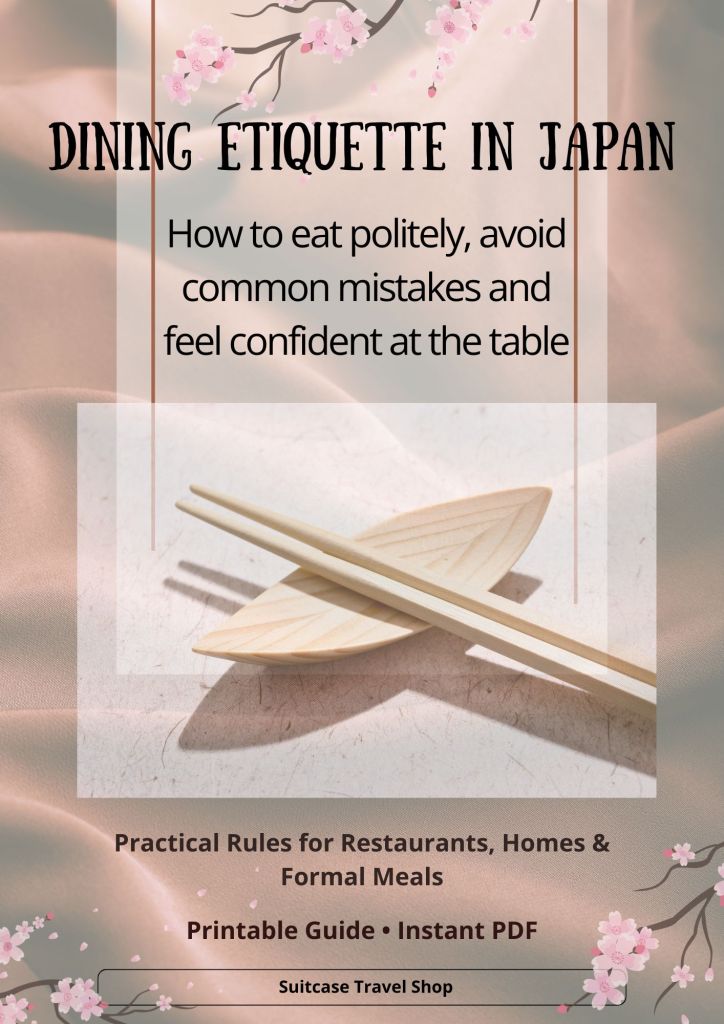
- This printable saves you time – everything is organized and you can instantly open on your phone.
- This printable perfect for – Travelers going to Japan – People who prefer visual guides
Instant download – Printable & Mobile – friendly
If you would like to contribute to my blog, you can please do so here
Connect with me on Social Media:
Discover more from Suitcase Travel Blog
Subscribe to get the latest posts sent to your email.


So much great information. Wish I was able to go travelling but reading and seeing other people’s photos is the next best thing. Thank you and best wishes.
LikeLiked by 1 person
I’m so glad you enjoyed it! I hope it brought a little touch of Tokyo to your day. Sending warm wishes! 🌸
LikeLike