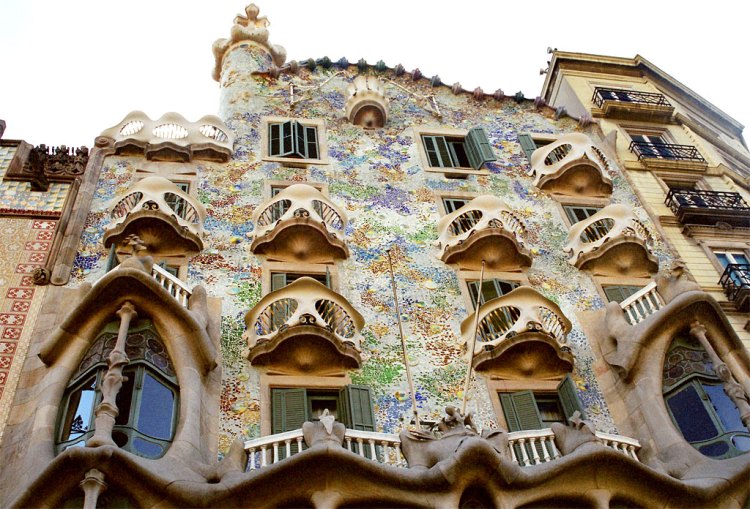
Barcelona is a city rich in architectural beauty including several notable buildings designed by the brilliant architect Antoni Gaudi: Casa Mila, Casa Batllo, Casa Calvet, Palau Güell and Casa Vicens. These whimsical structures are must-see attractions for both visitors and art lovers. Gaudi’s works, characterized by the absence of straight lines, colorful mosaics, and a mesmerizing play of light and color, appear as if they belong to another world. Drawing inspiration from nature, Gaudi aimed to transmit its beauty via his distinctive architectural curves, shapes, and color combinations. captivating details of these extraordinary landmarks.
Antoni Gaudí
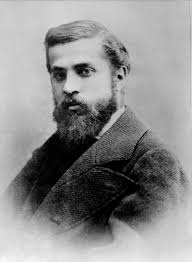
Antoni Gaudí, an innovative Spanish architect, became famous for his revolutionary work in Catalan Modernism. Gaudí, born in Catalonia in 1852, created a unique style recognized for its organic shapes, vibrant colors, and meticulous details. His creative designs drew inspiration from nature, spirituality, and his Catalan heritage, resulting in some of the most extraordinary and visionary buildings in Barcelona and beyond.
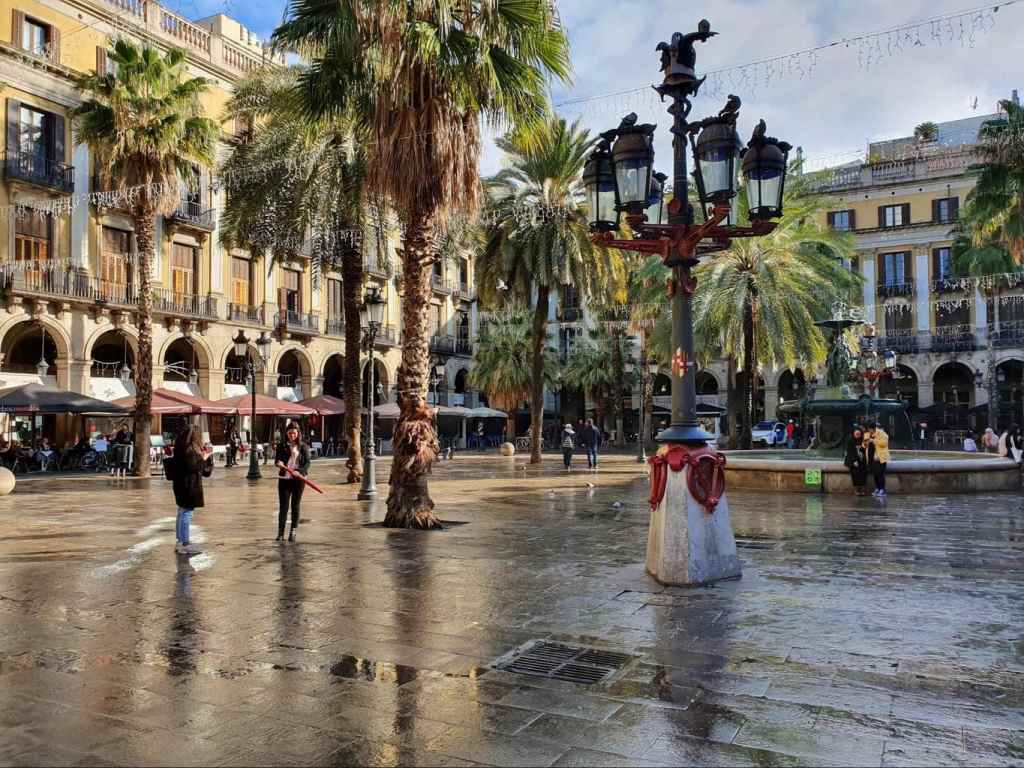
His first projects featured gas lamps in the Royal and Palace squares, as well as the National Boulevard in Barcelona. In 1878, Gaudí received an order from a glove shop owner to design a stand for the World Exhibition in Paris which marked the turning point in his career. Eusebi Güell, a wealthy Catalan industrialist, was impressed by the exhibition display and wanted to meet the young master. Thus began a strong alliance between a great creator and a generous patron of the arts, leading to the divine creation of projects that defined the unique appearance of Barcelona.
The collaborative creativity of Güell and Gaudí led to the imaginative creation of architectural sites like the Güell Palace, Güell Park, Güell wine cellars, the estate’s pavilions in Pedralbes near Barcelona, as well as chapels and crypts in Colonia Güell. Antoni became one of the most fashionable architects in Barcelona. Between 1898 and 1912, he built buildings: Palau Güell, Casa Calvet, Vicens, Casa Mila, Casa and Casa Batlló, which quickly became city landmarks.
Gaudí’s style is marked by a lack of straight lines and sharp corners. Using a technique called ‘trencads’, he created mosaic patterns that wrapped around his structures using broken ceramic, glass, and other material shards. This technique gave his buildings a sense of movement and fluidity, imitating nature’s shapes and forms.
Gaudí’s designs often used religious symbolism, reflecting his deep Catholic faith and belief that architecture could serve as a form of worship. He was also a master of structural innovation, experimenting with new materials and techniques.

Some of Gaudí’s most famous creations like the Sagrada Familia, demonstrates his innovative approach to architecture and its not only architectural marvels but also works of art that continue to inspire and amaze visitors from around the world.
A true masterpiece of innovative and visionary architecture, it continues to demonstrate the power of creativity, imagination, and passion.
At the age of 73, Gaudi was hit by a tram and died before finishing his primary project, the Sagrada Familia. Local taxi drivers discovered him, but Gaudi’s clothes made him look like a beggar, so they refused to take him to the hospital for a long time. Nobody recognized the famous architect until his friends found him in the hospital for the poor the next day. Unfortunately, Gaudi refused to transfer to a better hospital and died two days later.
Barcelona was in shock and sadness. As a result, Trams were withdrawn from Barcelona streets, and the route was permanently closed.
Antoni Gaudi was buried in the Sagrada Familia, to which he had dedicated the last 43 years of his life.
Are you curious why taxis in Barcelona are yellow and black?
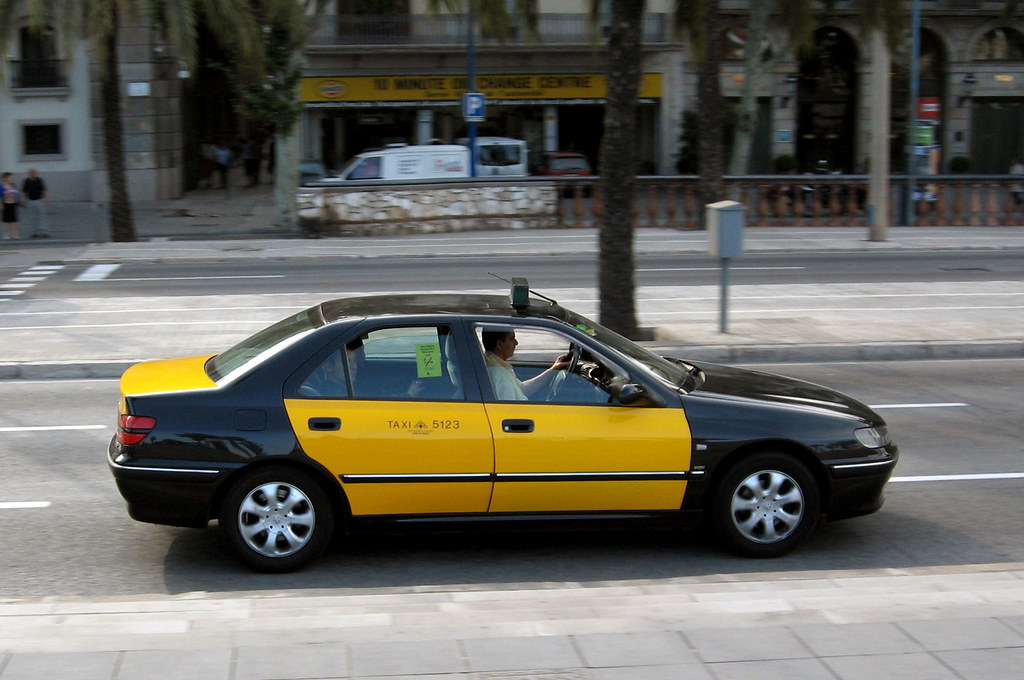
In Catalan symbology, black represents grief, and yellow represents shame, making this act symbolic of Gaudí.
The government of Barcelona forced all the taxi drivers of the city to wear the color of grief for the great Gaudi and the color of shame of human ruthlessness forever.
Let’s explore Gaudi’s famous and marvelous buildings now:
Casa Calvet
Location: Eixample
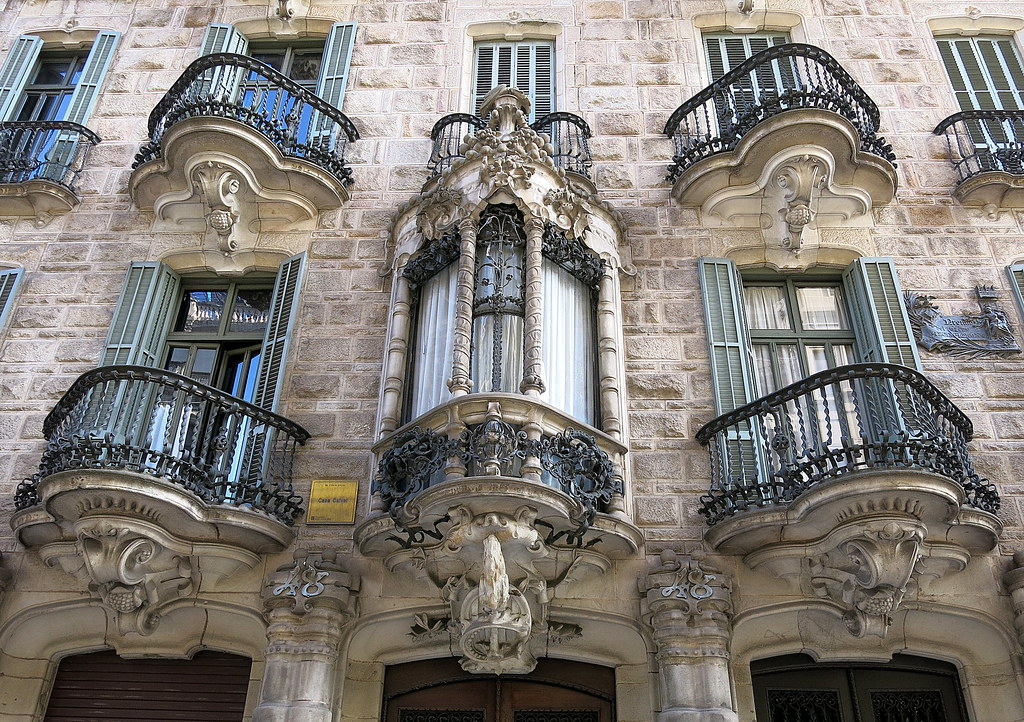
Casa Calvet building was designed by Antoni Gaudí for a textile manufacturer which served as both a commercial property and a residence. It is located in Barcelona’s Eixample area.
Gaudí considered this building to be his most conventional work due to its location in one of Barcelona’s most exquisite areas and the need to shoehorn it between existing structures.
Bulging balconies alternate with smaller, shallower balconies. Mushrooms over the oriel in the center refer to the owner’s favorite hobby.
The columns flanking the entryway are shaped like stacked bobbins, referring to the family’s textile manufacturing industry.
Three carved heads at the top also relate to the owner: one is Sant Pere Màrtir Calvet I Carbonell (the owner’s father), and two are the patron saints of Vilassar, Andreu Calvet’s hometown.
Palau Güell
Location: Passeig de Gracia
General visit: 12€
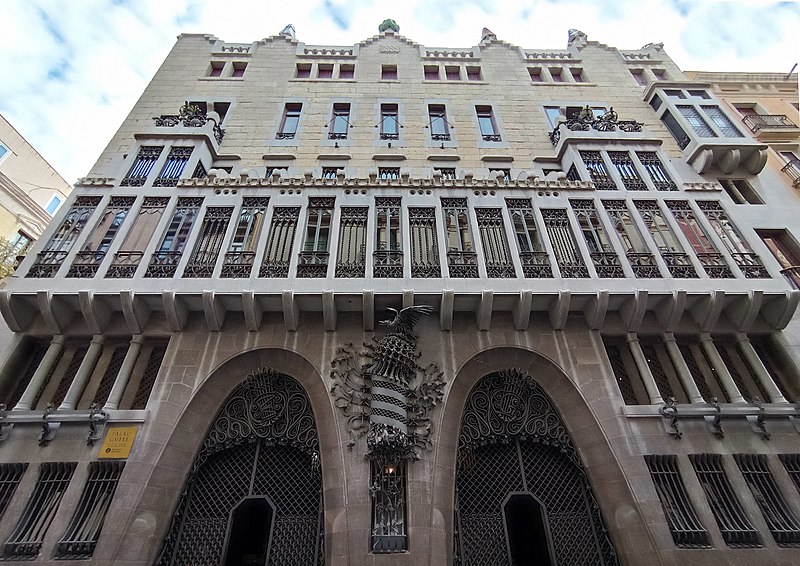
Antoni Gaudí designed and constructed the Palau Güell, the main residence of the industrial tycoon Eusebi Güell between 1886 and 1888. It is situated on the Carrer Nou de la Rambla, in the El Raval neighborhood of Barcelona.
It was Gaudi’s first major project, commissioned by Güell.
The residence was centered around the main area for hosting high-class visitors.
The building’s façade features two sets of massive gates designed specifically for horse-drawn carriages. The horses were taken down to the livery stable, while the guests took the stairs to the receiving room.
The entry arch is ornamented with an iron lattice imitating grape vines, and the house has 20 chimneys decorated with the trencadís method. The elaborate walls and ceilings of the reception room contained small observation windows high on the walls where the owners of the residence could observe their guests from the top level and have a “sneak peek” before welcoming them.
The reception hall is the centrepiece of the interior, capped by a parabolic dome that runs through several floors. It is painted in a deep, dark blue like the night sky, making everyone who enters the palace feel one with nature. Gaudí created tiny holes in the dome and placed lamps inside the sphere, creating the effect of glittering stars in the sky.
In Antonioni’s 1975 movie The Passenger, Palau Güell served as the setting for Jack Nicholson and Maria Schneider’s first meeting.
The Güell Palace was designated a UNESCO World Heritage site in 1984.
Casa Vicens
Location: Carrer de les Carolines
Admission: from 16€
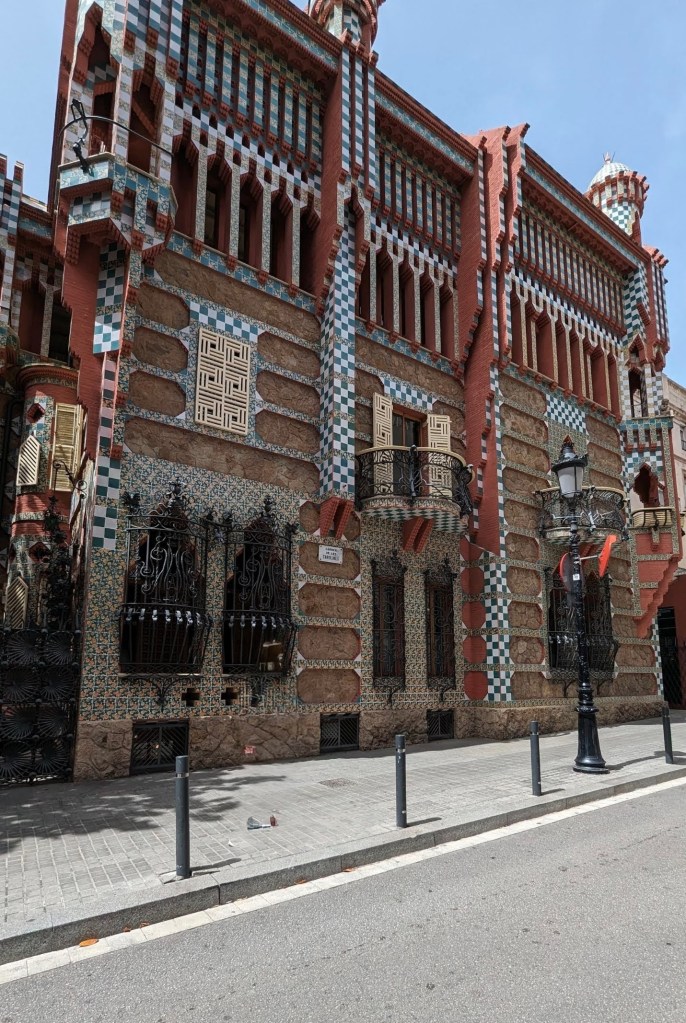
Casa Vicens is one of Gaudi’s first works and is considered the first sign of the Art Nouveau movement in Barcelona.
Manuel Vicens, the owner of a tile and brick factory, hired Antoni Gaudi to build a summer family residence in 1878.
Gaudi designed this building in the Barcelona neighborhood of Gracia between 1878 and 1880, and it was completed between 1883 and 1885.
Gaudí was influenced by several architectural styles, mostly Gothic Revival and Neo-Mudejar architecture. However, Gaudi’s unique style was noticeable, and one of his first works immediately drew attention.
The building’s façade is decorated with colorful ceramic tiles with plant ornaments, arranged in a checkerboard pattern. The choice of these materials served as a virtual advertisement for Manuel Vicen’s business.
There are several ornamental elements throughout the whole perimeter, including bay windows, balconies, turrets, and facade projections.
Gaudí created a garden with a fountain, gate, and rotunda shaped like palm leaves. The home changed owners several times in the mid-20th century, and these details have not survived to this day.
Casa Vicens was designated a UNESCO World Heritage Site in 2005, and a museum opened there in 2017.
Casa Batllo
Location: Passeig de Gràcia
Admission: from 29€
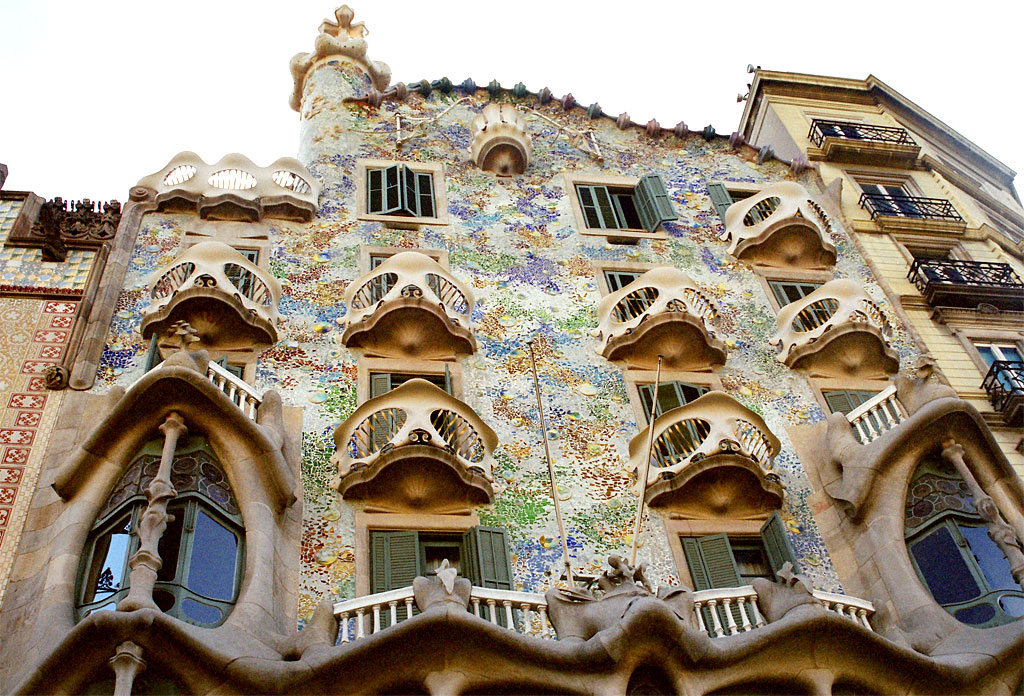
Casa Batllo is another unique masterpiece of Gaudi’s modernist architecture, recognized by its whimsical design and vibrant façade.
The structure is known locally as Casa dels ossos (House of Bones), due to its visceral, skeleton organic feel.
Casa Batlló is a reconstruction of the original building, which was owned by textile magnate José Batlló since 1900. It is located on one of Barcelona’s main boulevards, Passeig de Gràcia.
The eight-story structure has an area of 4.3 thousand square meters and a height of 32 meters.
The decorated exterior of the building is covered with broken ceramic tiles, recycled materials, and some objects known as “trencadís”. This is Gaudí’s signature element that appears often in his works.
Also, Gaudi tried to use natural materials of local origin such as stone from Montjuïc mountain for the first three stories of the home.

The building’s façade is covered in mosaic tiles, with flowing lines and organic shapes that depict marine life. The arched roof was inspired by a dragon’s back.
Gaudi used the gradient color of decorative tiles in the courtyard to maintain consistent illumination, which changes tone from white to blue. For the same reason, the windows facing the terrace vary in size, becoming smaller towards the top.
The interiors include curving walls and skylights, producing a stunning movement of light and shadow.
Casa Batlló was included on the UNESCO World Heritage List in 2005.
Casa Mila (La Pedrera)
Location: Passeig de Gracia
Admission: from 28€

Casa Mila is one of Gaudi’s most well-known residential buildings and the first of the 20th-century structures designated as UNESCO World Heritage Sites.
Casa Mila is also known as “La Pedrera,” which means “Stone Quarry.”
This residential building was built between 1906 and 1912 and is named for the Mila family, who commissioned it.
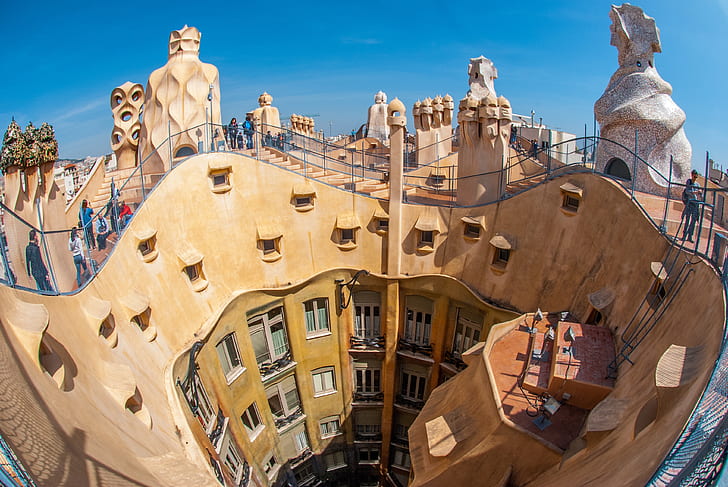
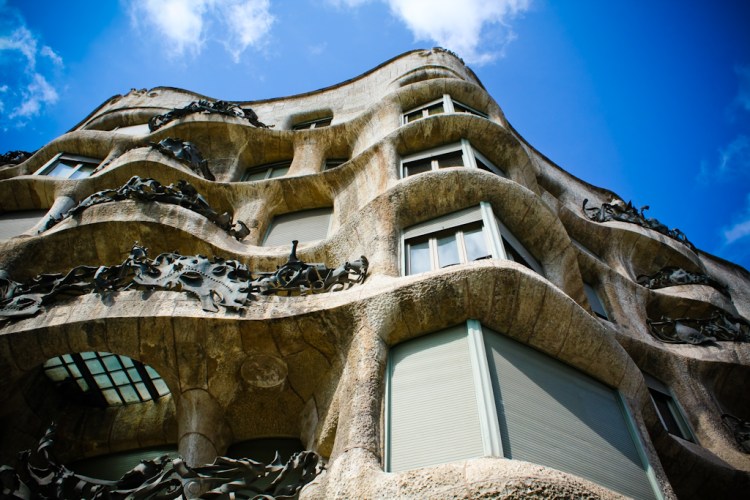
The building has a self-supporting massive stone façade, which was a unique architectural style for its time and a revolutionary feature of the early 20th century. Winding wrought iron balconies, a large rooftop terrace, and an open floor plan are also amazing highlights of this building.
One of Gaudi’s ideas was to combine three internal courtyards into one to maximize natural light and fresh air.
The remarkable interior of the building is also impressive. It has curving walls, elaborate ceilings, and a central courtyard that allows for natural light. The building features an underground garage, which was an extremely unusual and unique solution in the early twentieth century.
Casa Mila was Gaudi’s final project before focusing entirely on the construction of the Sagrada Familia.
Visiting Casa Mila, Casa Batllo, Casa Calvet, Palau Güell and Casa Vicens is not only a journey through Gaudi’s creative mind but also a unique opportunity to experience the beauty of Barcelona’s architectural heritage. These buildings stand as a tribute to Gaudi’s genius and continue to amaze and inspire people from around the world.
Don’t miss the chance to explore these architectural gems and immerse yourself in the magical world of Antoni Gaudi.
If you would like to contribute to my blog, you can please do so here
Connect with me on Social Media:
Discover more from Suitcase Travel Blog
Subscribe to get the latest posts sent to your email.
 Suitcase Travel Blog
I knew he designed other buildings in Barcelona, but I had no idea there were this many. You could spend your entire time in the city just exploring them! Maggie
LikeLiked by 1 person
That’s true. Barcelona is fantastic, dynamic and rich in art city. I felt in love with Barcelona 🙂
LikeLiked by 1 person
I’d love to go back!
LikeLiked by 1 person
Go! 😀 It’s amazing. I’m sure you will enjoy the city, art, their lifestyle and of course food🙂
LikeLiked by 1 person
So may places to go, so much food to eat!
LikeLiked by 1 person
😀 part of the life
LikeLiked by 1 person
We did a remarkably similar post to this on our journey through Spain last summer. Just one other element to a fabulous city.
LikeLiked by 1 person
I love Spain and I love Barcelona! I just read couple of your posts and you brought memories from my trip back. We had a wonderful trip.
Do you have a option to “like” your post? I couldn’t do it.
LikeLiked by 1 person
Yes, it should be there right at the bottom 😊
LikeLiked by 1 person
Great post Angela! I love Barcelona, such a beautiful and unique city.
LikeLiked by 1 person
It is! I just fell in love with Barcelona! 🙂
LikeLiked by 1 person
Thank you! 💗
LikeLiked by 1 person
Barcelona is such a wonderful city, like you I enjoyed finding all these masterpieces on my recent trip 🙂
LikeLiked by 2 people
Yes there so much to see. Very beautiful city and it has some special vibes. I love it 🙂
LikeLike
We had a city break in Barcelona a few years ago. I wrote two blog posts about this wonderful place! We only spent five days there and would love to go back. Your Barcelona posts are bringing back many happy memories – thanks!
LikeLiked by 1 person
Barcelona stole my heart. I had a great time there. The city is beautiful and has unique city vibes.
Let’s recall our trips together as I can’t quit thinking about this city. I’m sure you have had an amazing time there as well.🙂💗🇪🇸
LikeLiked by 1 person